International exchange, innovative event formats and new perspectives from motorsport shaped this year’s workshop of the association of leading Alpine World Cup organisers.
How can World Cup races become even more attractive? Which new formats can inspire audiences? And what can Alpine skiing learn from other major international sporting events? These and other questions about the future were at the heart of Club5’s three-day workshop at the TH Congress Hotel Lazise. Twenty-four of the 27 member organisers took part in the meeting at lake Garda.
The further development of the Alpine Ski World Cup and the shared goal of making races an even more exciting experience for fans on site and watching from home were at the centre of the event. Discussions focused, among other things, on new ways of staging events and engaging audiences. The organisers see particular potential in the bib draw, which could in future be developed more strongly as a standalone event and become an additional highlight of the race weekend.
Inspiration from a range of different fields was provided by Tom Weirather of WWP, sports managers Andrea Cappelletti and Claudia Morandini, as well as Italian cycling professionals Elena Cecchini and Elia Viviani. Their contributions offered new perspectives on topics including fan engagement, event design and the further development of international sporting events.
A Look Behind the Scenes of Formula 1
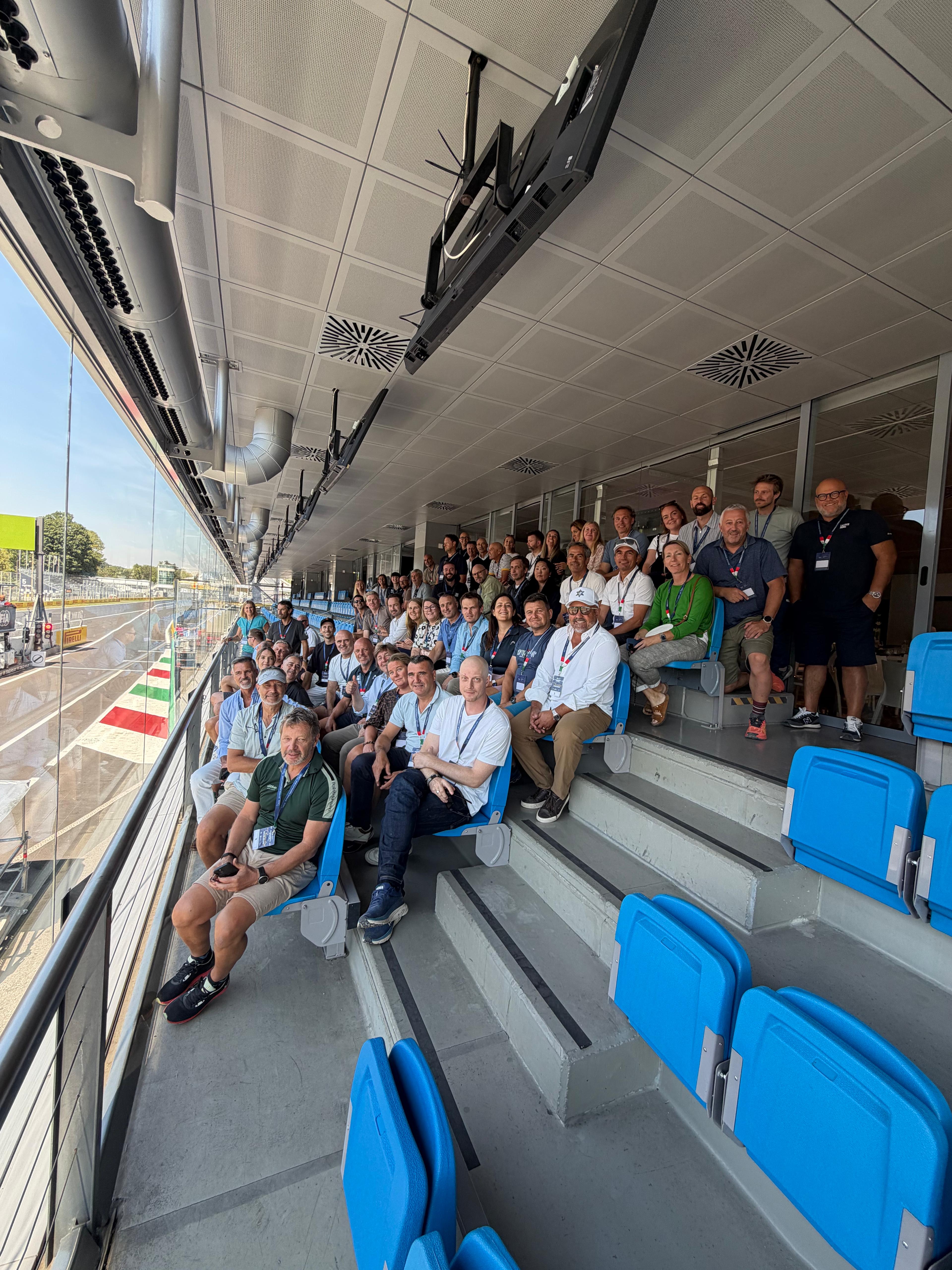
One of the highlights of the Club5 workshop was a visit to the historic Autodromo di Monza racetrack. Just days before the F1 Italian Grand Prix, the World Cup organisers had the opportunity to gain insights into the organisation and operations of one of the world’s most important motorsport events.
The programme included expert presentations, among them one by Umberto Andreoletti, as well as tours of the paddock, pit lane and racetrack. Stefano Domenicali, President and CEO of Formula 1, also provided insights into the strategic development and international positioning of the racing series. The exchange highlighted a number of approaches from Formula 1 that could also be relevant to the presentation and marketing of the Alpine Ski World Cup.
Direct Dialogue with the FIS
Club5 members also held discussions with FIS Secretary General Urs Lehmann on current developments and potential changes in international skiing. Lehmann provided information on the financial situation and the new organisational structure of the International Ski and Snowboard Federation.
The future direction of the World Championships was also discussed. One possibility under consideration is to hold the World Championships annually, except in years when the Winter Olympic Games take place. Potential adjustments to the various racing series and a reduction in the size of starting fields were also addressed.
The direct dialogue gave the organisers an opportunity to contribute their concerns, expectations and practical experience to the discussions.
Safety, Volunteers and Digitalisation in Focus
Volunteer management and the ongoing digitalisation of event organisation were another key focus. Norwegian company Rubic presented various solutions and approaches in this area. Safety in the Alpine Ski World Cup also featured prominently on the agenda. Together with representatives of SPM and Liski, as well as FIS Race Directors Markus Waldner and Peter Gerdol, participants discussed current challenges and possible improvements. For Club5 and its member organisers, the safety of athletes, teams, volunteers and spectators remains a key priority.
The workshop at the TH Congress Hotel Lazise once again highlighted the importance of international cooperation within Club5. Through the exchange of experience, ideas and best practices, the association aims to continue playing an active role in the sustainable development of the Alpine Ski World Cup and in strengthening its appeal to fans, athletes and partners.